Beyond Gaming: How Virtual Production is Unlocking New Horizons for 3D Artists
For years, a prevailing misconception suggested that mastering 3D graphics or learning Unreal Engine 5 served a single destination: the video game industry. However, the rapid evolution of digital media production has established that gaming is merely one sector within a vast spectrum of opportunity. In recent years, Virtual Production (VP) has emerged as a transformative force, revolutionizing filmmaking, commercial advertising, and interactive entertainment globally.
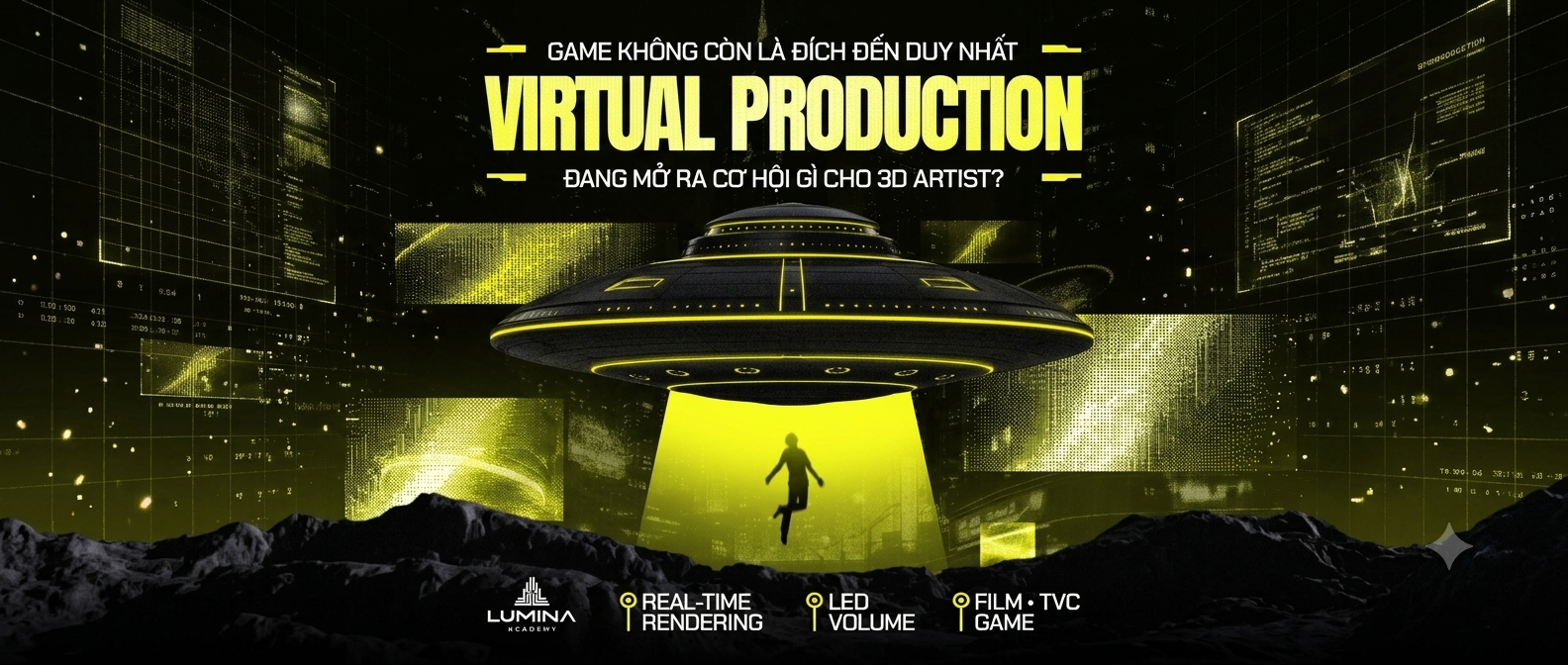
Rather than relying on conventional chroma-key green screens and lengthy post-production compositing phases, modern production houses utilize massive LED Volumes driven by Unreal Engine 5's real-time rendering capabilities. This technology displays immersive 3D environments directly on set during principal photography. Directors, cinematographers, and actors can interact with final-quality backgrounds instantaneously, drastically compressing production schedules and optimizing operational budgets.
Expanding Career Trajectories for 3D Talent
The expansion of Virtual Production is fundamentally redefining the scope of 3D artistry, blurring the lines between gaming, cinema, and commercial broadcasting. This convergence has created unprecedented demand across multiple specialized roles:
- Environment Artists: Beyond crafting game levels, Environment Artists now construct photorealistic cities, natural ecosystems, and fantastical environments directly utilized in high-budget Music Videos (MVs), TV commercials, and live LED-assisted events.
- High-Demand Technical Roles: The industry-wide pivot toward real-time workflows has driven intense demand for skilled Unreal Artists, Lighting Artists, and Technical Artists—professionals who bridge the gap between creative visual direction and real-time engine optimization.
Shifting from Tool Operation to Cross-Discipline Production Mindsets
In this evolving landscape, an artist's competitive edge no longer relies solely on knowing how to operate Unreal Engine 5. Instead, studio recruiters prioritize structural scene composition, asset optimization, cinematic lighting techniques, and a comprehensive understanding of real-world production pipelines. A 3D Artist equipped with a cross-disciplinary mindset will secure a broader range of career opportunities across the creative industry.
Aligning with global technological standards, Lumina Academy integrates Unreal Engine 5 into its production-driven curriculum. Students learn to build studio-standard environments from the ground up, developing a robust skill set ready to meet the demands of Gaming, Film, and Virtual Production alike.
Contact Information – Lumina Academy:
Official Website: www.lumina.edu.vn
Facebook Page:
Hanoi Hotline: 0988 998 169 | Ho Chi Minh City Hotline: 098 85 80 869
Campus Locations:
Hanoi: 219 Trung Kinh, Cau Giay District.
Ho Chi Minh City: Dashaus Building, 27 AB Tran Nhat Duat, Tan Dinh Ward, District 1.