What Makes a Great Game Boss? The Key Elements Behind Memorable Boss Fights
In modern video games, bosses are far more than enemies with larger health bars or stronger attacks. A well-designed boss often becomes the emotional and gameplay climax of the entire experience - the moment players remember long after finishing the game.
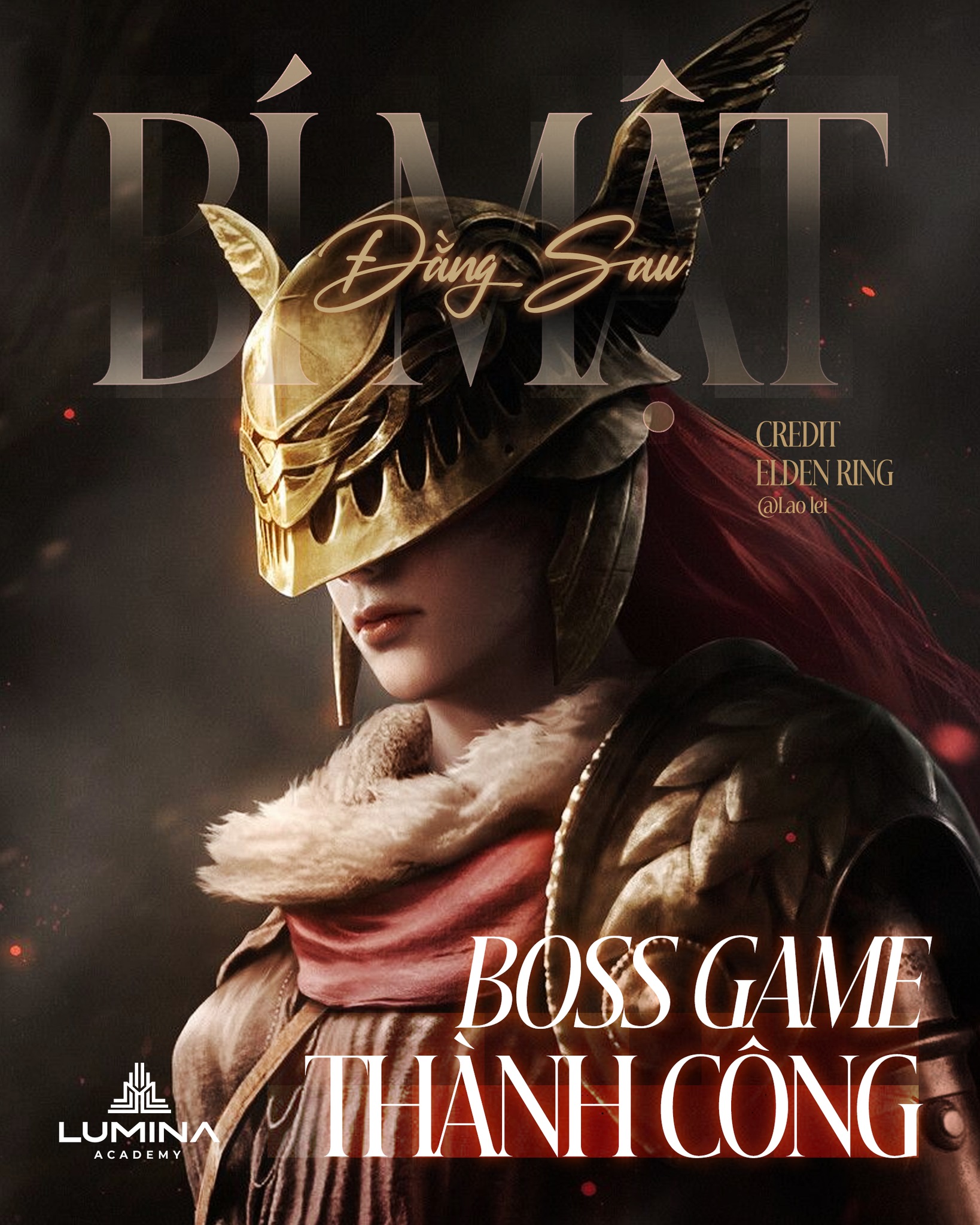
Some bosses frustrate players with their difficulty, yet remain unforgettable because of the excitement, tension, and satisfaction they create. This is where gameplay design, storytelling, animation, visual effects, and cinematic presentation come together to build truly memorable experiences.
One of the most important elements of a successful boss is strong visual recognition. In 3D character design, this concept is commonly known as a strong silhouette. A character with a recognizable silhouette can be identified instantly, even from a distance or under complex camera angles.
Many legendary game bosses are built around this principle. In Elden Ring, Malenia stands out through her golden armor, long katana, and distinct warrior posture. Meanwhile, Final Fantasy VII made Sephiroth iconic through his long silver hair and enormous Masamune sword - visual traits that players immediately recognize.
However, visual design alone is not enough. A memorable boss must also force players to truly understand the game.
Great boss fights act as skill examinations. Instead of simply increasing enemy stats, strong boss design requires players to read attack patterns, react with precise timing, avoid damage strategically, and discover weaknesses through gameplay.
In Elden Ring, Malenia became infamous because players needed near-perfect dodge timing to survive. Meanwhile, battles against Ganon in the The Legend of Zelda franchise often feature multiple combat phases that constantly evolve to maintain tension and challenge.
When gameplay design is done correctly, the boss becomes more than just a difficult enemy - it becomes a meaningful test of player mastery and progression.
Storytelling also plays a major role in creating unforgettable bosses. The most iconic bosses are rarely generic villains. Instead, they are deeply connected to the game’s world, themes, or protagonist.
A boss may be a fallen god, a corrupted AI system, or even the hero’s former mentor. When players understand the narrative behind the character, the battle carries emotional weight beyond mechanical difficulty.
Beyond character design and storytelling, boss fights are often where studios showcase their highest level of technical production quality. Major boss encounters frequently combine advanced animation, VFX, lighting, and cinematic camera work to create large-scale spectacle.
Explosions, dynamic lighting, environmental destruction, dramatic camera movement, and visual effects all contribute to the sense of intensity and scale. This is why boss fights often become the most replayed, shared, and discussed moments within gaming communities.
A truly successful game boss combines recognizable visual design, challenging yet fair gameplay, meaningful storytelling, and impressive cinematic presentation. When all of these elements work together, a boss fight becomes more than just a battle—it becomes one of the defining experiences of the entire game.









Lumina Academy


